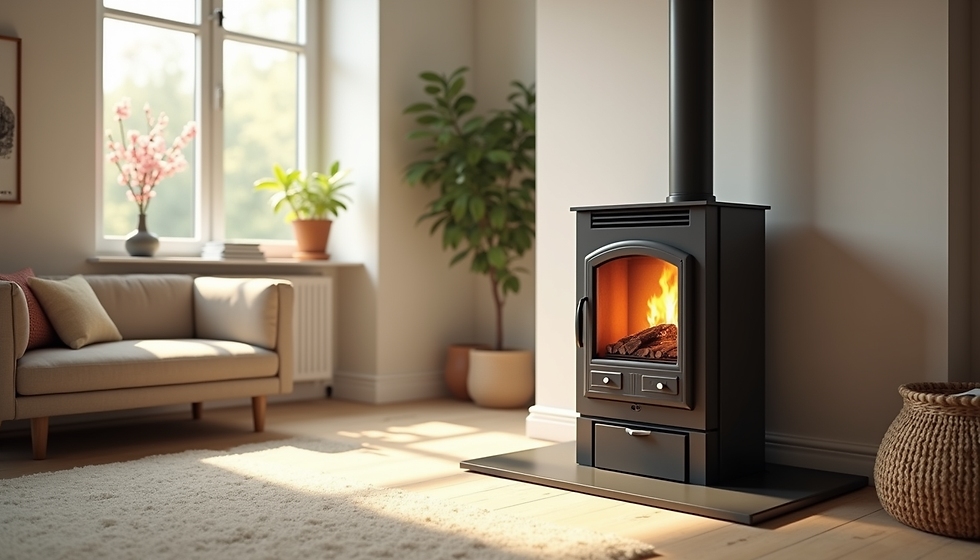
The Top Down Method: Benefits and Setup for Your Logburner
Starting a fire in your logburner can be tricky. Many people struggle with getting a clean, efficient burn that produces plenty of heat and little smoke. The top down method offers a simple way to light your fire that solves these problems. This technique helps your fire burn longer, cleaner, and with less effort. Here’s why it works and how you can set it up in your logburner.
Why Use the Top
Down Method?
The top down method reverses the traditional way of lighting a fire. Instead of lighting the kindling at the bottom, you light the wood at the top. This approach has several benefits:
Cleaner burn: Because the fire burns downward, it produces less smoke and fewer harmful emissions. The smoke passes through hot embers, which helps burn off gases that would otherwise escape.
Longer-lasting fire: The fire starts slowly and burns down through the wood, which means it lasts longer without needing constant attention.
Easier to light: You don’t need to fuss with lots of kindling or paper. The fire catches quickly and spreads naturally.
Better heat output: The slow burn means your logburner heats up steadily and maintains warmth for longer periods.
This method is especially useful in modern, efficient logburners designed to reduce pollution and maximize heat.
How to Set Up Your Logburner Using the Top Down Method
Setting up your fire this way is straightforward. Follow these steps for the best results:
Place the largest logs at the bottom
Start by laying two or three large logs side by side on the grate. These logs will burn slowly and provide the main fuel for your fire.
Add medium-sized logs on top
Stack a layer of medium logs across the large ones. Make sure they are arranged loosely enough to allow air to flow between them.
Add kindling and firelighters at the top
Place dry kindling and a natural firelighter on top of the medium logs. The kindling should be small sticks or thin pieces of wood that catch fire easily.
Light the fire at the top
Use a match or lighter to ignite the kindling and firelighter. The fire will burn downward through the layers of wood.
Adjust the air supply
Open the air vents fully at the start to encourage good airflow. Once the fire is established, you can reduce the air slightly to maintain a steady burn.

Tips for Success
Use dry, seasoned wood for the best burn. Wet or green wood produces more smoke and less heat.
Avoid overloading the logburner. Leave space for air to circulate.
Clean your chimney regularly to prevent blockages and improve airflow.
If your fire struggles to catch, check that your kindling is dry and that air vents are open.